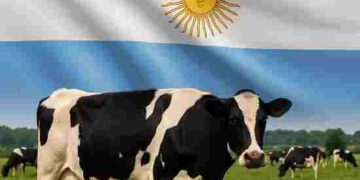





Argentina’s Dairy Production Rebounds Sharply in Early 2025
Argentina’s dairy industry has entered a phase of strong recovery, with March 2025 milk production jumping by 15.9% compared to the same period in 2024. According to the Observatorio de la Cadena Láctea Argentina (OCLA), total production reached 816.4 million liters in March alone. This momentum has elevated Q1 production growth to 9.7%, surpassing earlier projections of 9.1% by the organization.
Minimal Seasonal Decline Reflects Strengthening Fundamentals
In a typical year, Argentina’s dairy sector sees a 4–5% production decline from February to March. However, 2025’s seasonal drop was just 0.7%, suggesting robust herd health, favorable weather conditions, and improved producer margins.
The OCLA estimates a 5.7% growth in total annual liters and 6% in daily averages—targets that the current trajectory could outperform. Matching 2023’s output would require 6.9% growth, while catching up to 2022 would necessitate a 9.1% gain—both of which are now within reach.
Higher Milk Component Quality Boosts Sector Value
An 11.7% rise in milk component yields—namely butterfat and protein—has been recorded in Q1 2025. This improvement not only enhances the nutritional profile of Argentina’s milk but also increases its value in international markets where quality-based pricing is the norm.
Looking Ahead: Recovery Momentum and Export Potential
Favorable weather and stable input prices are expected to sustain this performance into Q2 2025. OCLA forecasts suggest 5–7% total growth for the year, making 2025 potentially one of the best post-pandemic recovery years for Argentina’s dairy sector.
Argentina is a significant global dairy exporter, particularly in powdered milk and cheese. Top importers include Brazil, Algeria, and Russia, with total dairy exports exceeding USD 1.2 billion annually. If momentum continues, 2025 may see these figures grow by 8–10%.
Global Dairy Market Outlook
The global dairy market is projected to reach USD 1.26 trillion by 2033, growing at a CAGR of 4.6% from 2023, driven by rising demand in emerging economies and protein-rich diets. Argentina’s rebound enhances its positioning within this landscape, especially amid supply constraints in Europe and Oceania.

