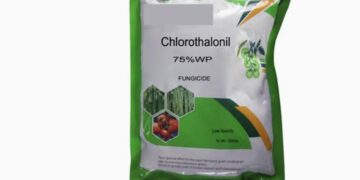





In early 2025, the global agrochemical market witnessed a significant surge in chlorothalonil prices, primarily driven by China’s strategic supply controls and escalating global demand. Chlorothalonil, a broad-spectrum fungicide essential for protecting crops like soybeans, vegetables, and fruits, experienced a price increase from RMB16,500 per ton in 2024 to RMB27,500 per ton by January 2025—a 66% rise.
China Informatics
Global Demand Dynamics
Despite regulatory restrictions in regions such as the European Union, chlorothalonil’s demand remains robust in key markets like Brazil and the United States. In Brazil, the fungicide is indispensable for controlling soybean rust, leading to its dominant consumption of 61% of global sales in 2023. The U.S. and China follow, accounting for 6.22% and 17.6% of the market share, respectively.
China’s Strategic Supply Control
China plays a pivotal role in the chlorothalonil supply chain, contributing approximately 90% of global production. Key Chinese manufacturers, including Jiangsu Xinhe, Suli Chemical, Shandong Dacheng, and Jiangsu Weunite, dominate the market. Jiangsu Xinhe alone accounts for about 40% of the global production capacity. The Chinese government’s stringent environmental regulations have limited the expansion of production capacities, contributing to the supply-demand imbalance and subsequent price hikes.
Market Implications
The surge in chlorothalonil prices has significant implications for the global agrochemical industry:
Farmers and End-Users: Increased costs of crop protection products may impact overall production expenses, potentially affecting crop pricing and profitability.
Agrochemical Companies: Firms reliant on chlorothalonil must navigate supply constraints and explore alternative fungicides or diversify their product portfolios to mitigate risks associated with price volatility.
Policymakers and Investors: The current market dynamics underscore the importance of sustainable production practices and the potential for investing in bio-based fungicides as viable alternatives.
Future Outlook
As China continues to enforce environmental regulations and control over chemical production, the chlorothalonil market is expected to experience ongoing price volatility and supply challenges. Stakeholders across the agricultural supply chain must adapt by considering alternative solutions, investing in sustainable practices, and enhancing supply chain resilience to navigate the evolving landscape of the agrochemical market.
Source: Chinainformatics.com

