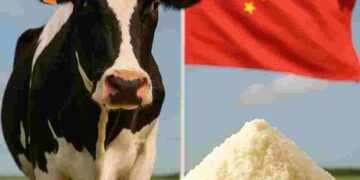





China to Enforce Ban on Reconstituted Milk from September 2025
In a significant regulatory move, China will officially ban the production of drinking milk made from milk powder starting September 19, 2025, allowing only raw milk for the manufacture of sterilized milk. The announcement is part of a broader overhaul in China’s food safety standards designed to reinforce quality assurance and consumer trust in the domestic dairy sector.
The ban is among 50 newly approved food standards and nine amendments released under the national food security strategy, reflecting China’s rising commitment to agricultural safety and product integrity.
Rationale: Food Safety and Domestic Support
The government cited two core reasons: food safety and support for local producers. Milk powder has historically ranked as the second most adulterated food item globally, trailing only olive oil. Incidents of contamination have included the use of urea, formalin, alkalis, acids, and melamine, prompting both domestic and international concern.
By eliminating reconstituted milk, regulators aim to protect public health while stimulating investment in raw milk infrastructure and production within China. This aligns with similar policies in Japan, the European Union, and recommendations by the WHO and FAO.
Market Impacts: Import Shift and Global Price Rebalancing
China is the world’s largest importer and consumer of dairy products. The new rule will:
- Reduce demand for imported milk powder, especially from New Zealand and the EU
- Increase domestic whole milk production
- Cause exporters to reconfigure supply chains and modify product portfolios
- Influence global milk powder prices, potentially creating oversupply in key exporting regions
In 2023, China imported over 650,000 tonnes of milk powder, accounting for more than 30% of global trade volume. New Zealand, the EU, and Australia were the top suppliers.
Outlook: Global Dairy Adjustments
As China moves toward greater self-reliance in dairy production, global stakeholders must adapt to new consumption trends and compliance standards. Exporters may pivot to producing other dairy formats, while Chinese dairy producers benefit from policy tailwinds and market protection.
The dairy industry globally is expected to continue growing, with the market projected to exceed USD 1.5 trillion by 2033. However, national standards like this are set to reshape how and where value is captured across the supply chain.
This regulation marks a milestone in China’s evolving agri-policy and its intent to raise the bar in food quality, safety, and transparency.

